
Clare Minter
Reflexology & Wellbeing Saffron Walden, Essex
Clare Minter
Reflexology & Wellbeing Saffron Walden, Essex
Reflexology for Menopause
Supporting you through this natural transition...
Struggling with menopause symptoms?
Disturbed sleep, hot flushes, weight gain, increased anxiety, low mood, brain fog...
These are just some of the symptoms that 80% of UK women will experience as they approach menopause.
Stress and menopause
* Research shows that elevated levels of the stress hormone cortisol, may increase the likelihood of more severe menopausal symptoms - so it's vital to reduce stress and make relaxation a priority.
The hormones oestrogen and progesterone provide natural calming effects upon the body, but as levels start to decline during perimenopause, you may feel the effects of stress more acutely. This often increases feelings of anxiety - a very common symptom.
Other life changes may also coincide with menopause - perhaps concerns about aging parents or children leaving home - so it's important to look after your emotional wellbeing during this time.
* Cagnacci A, Cannoletta M, Caretto S, Zanin R, Xholli A, Volpe A. Increased cortisol level: a possible link between climacteric and cardiovascular risk factors, Menopause. 2011 Mar; 18(3):273-8. doi: 10.1097/gme.0b0133181/31947. PMID:21037488
How reflexology can help
Reflexology can be a great support for the perimenopause years and beyond. This is a good time to evaluate your lifestyle and prioritise self care, as self-help activities - such as reflexology - may help you to have a smoother transition.
Reflexology sessions are an effective way to relieve stress and may also help to:
- Lift low mood.
- Promote restful sleep.
- Ease muscular tension.
- Enhance feelings of wellbeing.
Treatments may be especially suitable if you're keen to take an holistic approach or are unable to use Hormone Replacement Therapy. However, reflexology also works well alongside HRT and provides valuable relaxation benefits.
* Research has shown that reflexology can reduce vasomotor symptoms (hot flushes/night sweats) and improve the quality of life for menopausal women.
* (E. Gozuyesil, M. Baser, Complement Ther Clin Pract. 2016 Aug;24:78-85. doi: 10.1016/j.ctcp.2016.05.011. Epub 2016 May)
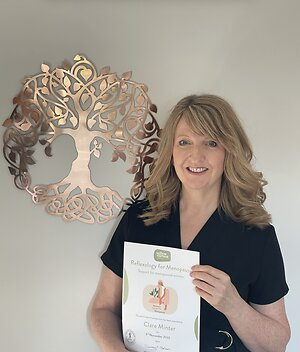
We will all have our own unique experience of menopause... when encountering my own challenges, I was drawn to holistic methods to help ease my symptoms. I also researched and gained a comprehensive understanding of HRT and completed specialist 'Reflexology for Menopause' training. So I have the knowledge and skills to be able to support you throughout your menopause transition.
Please get in touch if you're struggling, as I've been there myself and would love to help!
The perimenopause years
Menopause is considered complete when a woman has not had a menstrual period for 12 consecutive months. This usually occurs between the ages of 45 and 55 - sometimes even earlier or later - but the average age is 51. In the years preceding this, the following symptoms may appear. You may not have connected these with declining hormones - and it's very common to put them down to stress...
- Hot flushes
- Night sweats
- Fatigue
- Brain fog
- Difficulty concentrating
- Low mood
- Insomnia
- Stress and urge incontinence
- Headaches and migraine
- Weight gain
- Loss of confidence
- Fatigue
- Joint/muscle pain
- Dry eyes/mouth
- Loss of libido
- Vaginal dryness
- Acid reflux
- Dry skin
- Thinning hair
- Changes in body odour
These changes are all part of a natural transition, but seeking support could make some meaningful difference at this time.
What my clients say
Other support
Every woman will have her own unique experience of menopause. But if your symptoms are affecting your quality of life, please don’t suffer in silence…
Over the last few years, celebrities including Davina McCall and Mariella Frostrupp - plus the hormone specialist Dr Louise Newson - have raised valuable awareness of menopause and how it can negatively affect women's lives.
There is now better understanding and more support available - including newer body identical and transdermal versions of HRT. You should be able to discuss all of the options available to you with your GP or Practice Nurse.
The following resources may also be helpful:
© Clare Minter
powered by WebHealer